

The technical reasoning behind my choice of measurement hardware.
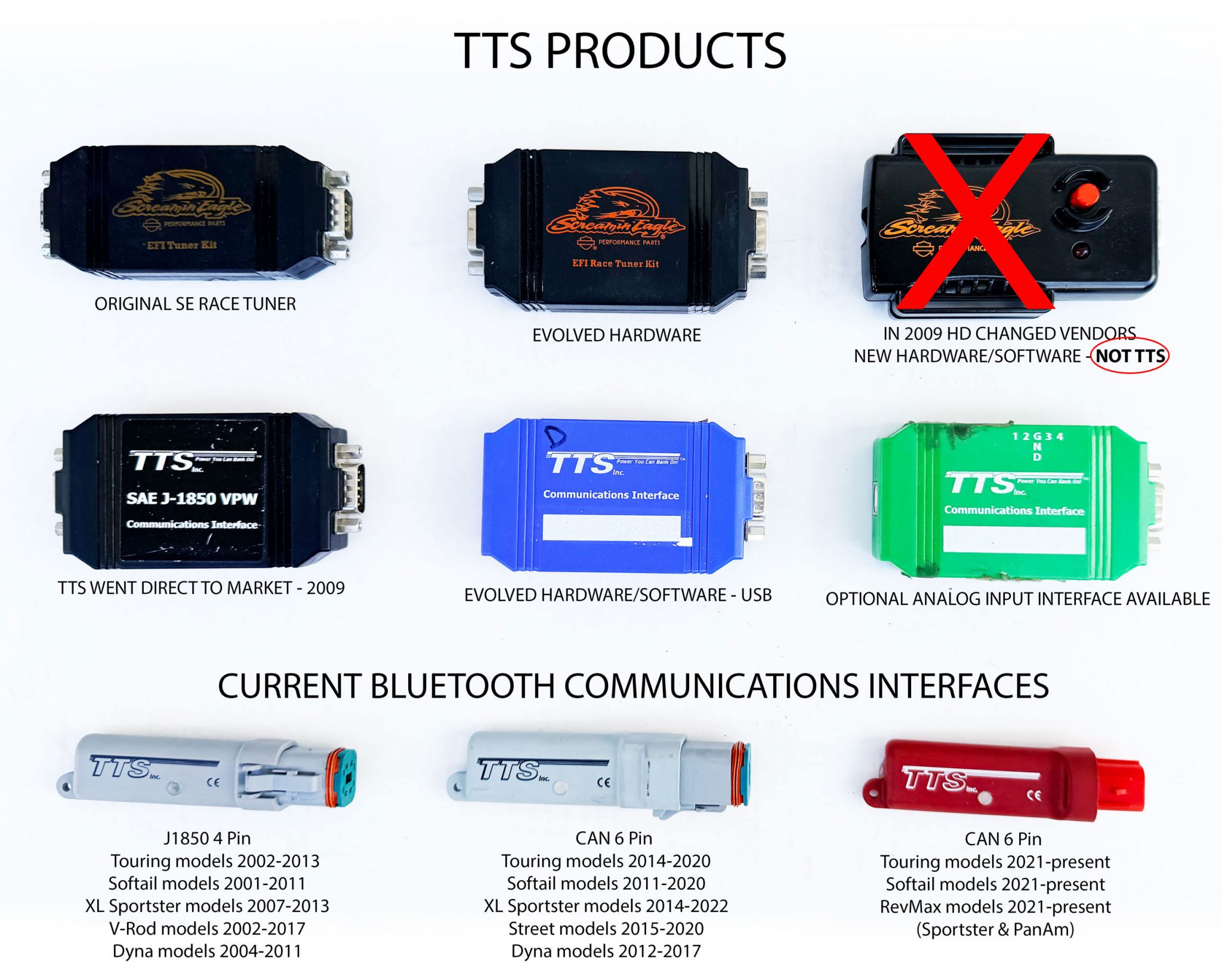
My hardware choices aren’t about brand loyalty — they’re about data integrity. I use the TTS MasterTune system paired with NTK/NGK wideband sensors because in precision tuning, the instrument determines the outcome. And this isn’t arbitrary: the Powervision — the most common alternative — only supports Bosch LSU 4.2 sensors. NTK/NGK widebands aren’t compatible with it. So if accurate measurement hardware is the priority, TTS isn’t just a preference; it’s the only path to the sensor quality I require.
1. The Sensor: Why NTK Outperforms Bosch LSU 4.2
Most wideband kits for Harleys use the Bosch LSU 4.2 — a capable consumer-grade sensor, but one with real limitations in a professional tuning environment.
The NTK/NGK sensor, paired with the AFR500 controller, is a laboratory-grade instrument. It handles leaded race fuels and high exhaust gas temperatures without the lead fouling and thermal shock sensitivity that make the Bosch 4.2 unreliable over a long dyno session. More critically, the NTK responds faster and more stably to transient throttle inputs. In tuning, I need to see exactly what’s happening in the milliseconds of a throttle tip-in — “close enough” produces close-enough results.
2. Free-Air Calibration vs. Factory Presets
This is the most consequential difference in my workflow.
Bosch-based systems typically rely on a calibration resistor built into the connector — a factory preset that cannot account for sensor aging or contamination over time. My NTK/AFR500 setup allows for manual free-air calibration. Before making any critical fueling decisions, I calibrate the sensor to current atmospheric oxygen levels. This establishes a verified baseline. If a sensor is beginning to drift, I catch it before it corrupts the map — not after the bike has been running on false data.
3. The Interface: TTS MasterTune
TTS offers a higher data sampling rate than most CAN-bus flash tuners, which means the analog signal from the NTK controller becomes a high-resolution picture of engine behavior rather than an averaged approximation. Equally important: TTS works with the factory Delphi ECM rather than working around it. The ECM’s factory logic is sophisticated — I want to leverage it, not bypass it.
The Bottom Line
Bosch-based systems are cheaper and easier to auto-tune. That’s why most shops use them — and why the Powervision, built around that sensor standard, is the default choice in the industry.
I use NTK and TTS MasterTune because my goal isn’t just to make the bike run — it’s to tune transient response, load transitions, and long-term reliability with certainty. That requires knowing the data is true before I touch the map.
I’m not looking for a close AFR. I’m looking for the truth.
